Showing posts with label Virginia Woolf. Show all posts
Sunday, March 28, 2021
Monday, September 24, 2018
Musing on the World, Unfolding
I detest the masculine point of view. I am bored by his heroism, virtue and honour. I think the best these men can do is not to talk about themselves any more.
Virginia Woolf
1931
For most of Sophie's life, my greatest fear was, of course, her death. The fear of death had the greatest of urgencies and propelled me in literally every single decision that I ever made concerning her. I don't know when that fear left me or when I became not so much accustomed to it, but rather looked upon it, the possibility of it, as just part of all of it. Part of living that is, part of fighting for someone's quality of life, that is. Death is just part of all of it. I can not know of Sophie's death until and if it happens, if ever, just as I could not know of Sophie's life until it happened. She grew inside of me, was a part of me and me her, yet still I did not know her life.
The word intimate. The word intimation.
Having some equanimity doesn't mean I am not consumed, some days, with fear and anxiety and such a strong sense of overwhelm that I hardly know how I am functioning.
But then it lifts.
I had never read the Woolf quote before today. She was, apparently, speaking of war in particular, but hell, it pertains to what's going on today as well.
Here's what I think (with full awareness of the irony in Woolf's admonition to not talk about themselves any more).
All of this cluster-fuckery (Kavanaugh, Trump, the Republican Judicial committee, KellyAnn Conway and the other women who support the authorities in power) is a painful part of a process -- an inexorable process that will lead to a better world, a world that we have not yet known, a patriarchy disintegrated and power not defined by sex. I think women are engaged in ways that the world has never seen -- engaged socially, sexually, politically, and personally.
I think men and women who do not get out of the way will be made irrelevant -- far more irrelevant than they imagine. It's exhausting and exhilarating. I think the unfolding is so stressful and induces so much anxiety because we are witness to it as it unfolds in real time. As humans we are perhaps incapable of grasping all of it, all of the suggestions of what will follow even as we are exhorted to notice and take in everything that technology throws at us.
I think we can only intimate what it might portend because we have never known a world with such intimations.
#MeToo
Monday, May 14, 2018
Carried by Great Winds
There I am with what I called 2/3rds of the circus that I run. The work of my heart. Mother's Day came and went. The College Boy is home for the summer. The Brothers are back at it. Sophie had a rough weekend but is better today. I'm going through loads of paperwork and hustling for freelance jobs. I'm baking cakes. I'm answering calls and emails and appeals for help regarding medical cannabis. I'm working on an exciting caregiver project that I'll tell ya'll about soon. I'm reading novels and excited to start watching the Patrick Melrose mini-series. I read those brutal and beautiful books years ago and so look forward to seeing Benedict Cumberbatch playing the lead.
Here's a poem that my friend Noan sent me the day before Mother's Day. It's by Alison Luterman, and I think it's perfect:
Invisible Work
Because no one could ever praise me enough,
because I don't mean these poems only
but the unseen
unbelievable effort it takes to live
the life that goes on between them,
I think all the time about invisible work.
About the young mother on Welfare
I interviewed years ago,
who said, "It's hard.
You bring him to the park,
run rings around yourself keeping him safe,
cut hot dogs into bite-sized pieces fro dinner,
and there's no one
to say what a good job you're doing,
how you were patient and loving
for the thousandth time even though you had a headache."
And I, who am used to feeling sorry for myself
because I am lonely,
when all the while,
as the Chippewa poem says, I am being carried
by great winds across the sky,
thought of the invisible work that stitches up the world day and night,
the slow, unglamorous work of healing,
the way worms in the garden
tunnel ceaselessly so the earth can breathe
and bees ransack this world into being,
while owls and poets stalk shadows,
our loneliest labors under the moon.
There are mothers
for everything, and the sea
is a mother too,
whispering and whispering to us
long after we have stopped listening.
I stopped and let myself lean
a moment, against the blue
shoulder of the air. The work
of my heart
is the work of the world's heart.There is no other art.
Allison Luterman
A long time ago one of my relatives, from whom I am now estranged, wrote a caustic comment on this blog, imploring me to get my head out of my ass and quit reciting poetry. Something like that. It stung then because there was a bit of truth in my head being up my ass. I felt a bit of the old shame and embarrassment at being bookish, having my head in the clouds, being book smart as opposed to street smart, pretentious instead of easy-going.
Whatevs, as they say. The thing about being more than half a century old combined with living in the Trump era, is that you can shed all that shame and run for the hills with your poetry, bringing anyone willing along with you.
What else? I went to see an incredible interpretive theater thing called the theater is a blank page by Ann Hamilton and Siti Company at Royce Hall on the UCLA campus this past Saturday. I might as well have been raptured up right there, as it was a wild interactive theater performance of Virginia Woolf's novel To the Lighthouse, hands-down probably my favorite novel ever.* I don't even know how to describe the experience that my friend Tanya, Chris and I had attending this show, but it was restorative and mesmerizing, and we all left feeling -- again -- like we'd been raptured into a writer/reader/lover of words heaven. Check it out if it comes to your town. Here's a video that I found on the internets of part of the performance in another city:
Also, if you're not one of the more than 115 MILLION people who've already watched Childish Gambino's incredible performance piece This is America, you should. I've said it before, but in these messed-up, clusterfuckery times, art and corporeal politics can save us.
* My Top Ten Favorite Novels
- To the Lighthouse by Virginia Woolf
- The Brothers Karamazov by Fyodor Dostoyevsky
- The English Patient by Michael Ondaatje
- Middlemarch by George Eliot
- The End of the Affair by Graham Greene
- Beloved by Toni Morrison
- Let the Great World Spin by Colum McCann
- Love in the Name of Cholera by Gabriel Garcia Marquez
- Machine Dreams by Jayne Ann Phillips
- Possession by A.S. Byatt
Who am I kidding? I didn't even list the children's books that should rank up there. It's virtually impossible for me to narrow down my favorite novels to ten, but those are the ones that come immediately to mind. What are yours, Reader?
Labels:
Alison Luterman,
Ann Hamilton,
art,
culture,
favorite novels,
Henry and Oliver,
Mother's Day,
musings,
Patrick Melrose novels,
poetry,
reading,
Siti Company,
Sophie,
theater,
Virginia Woolf,
writing
Tuesday, December 19, 2017
This Is Still A Blog
For how could one express in words those emotions of the body?
Virginia Woolf, To the Lighthouse
I would like to be the Milky Way, star-stretched and caught by your eye, a lens made vigorous by my streak of starlight. Beheld. I would like to be that bird, hover point, my beak just above the water, the moment your eye blinks the shutter my shudder which is either from your shot, captured, or from the expectation of flight and freedom.
Friday, October 13, 2017
How We Do It: Part ? in a Series Where I Call on the Hive Mind
For how could one express in words those emotions of the body?
Virginia Woolf, To the Lighthouse
I need the hive mind as collective unconscious, acting in community and sharing in resources and thoughts. I don't need conformity or group-think. There are two ways of seeing the hive-mind, and I'm not seeing it as pejorative. That being said,
Help.
I just had a little bit of a freak-out after trying to feed Sophie. I've written before about this, but things that used to come easily to her: eating, drinking, swallowing, walking, going to the bathroom (pooping), reaching for things, generally moving, are sporadically and inconsistently difficult for her.
Let's cling to the word inconsistent.
I can't do this anymore, is what I said on the phone just now. I am reaching back to the past, to all the times that I couldn't "do this anymore." I leaned my head on the wall. I was sitting in a chair in my bedroom on the far end of the house, the farthest away from the front end of the house where Sophie sat in her chair. I couldn't do it anymore. I couldn't do it anymore back on the fourth floor of the walk-up on West 73rd Street in 1995 and placed the screaming baby in the middle of the bed, then walked into the bathroom and turned on the shower and crouched on the floor next to the toilet. There is something very primitive about not being able to even feed your child, I said on the phone just now. Soft egg lay all around Sophie's wheelchair and the dog lurked at my feet, trying to edge in. I remember Sophie pacing around her room like a drooling tiger back when she was on the ketogenic diet and I'd come into her room with a tiny ceramic dish of frozen butter and a slice of strawberry on top that was her meal. The brutality of that time. Eighteen years ago. Those two examples suffice.
My point is that I can't do this anymore. (You know I can).
So, hive mind. What is going on? I am waiting for the results of an MRI that Sophie had last week, but I'm pretty certain it will be inconclusive. Her most recent EEG shows nothing more than the general fuckery of Lennox-Gastaut syndrome and the seizure pattern that she's had for more than two decades. She is, actually, doing pretty well on the clinical seizure front, given her history. Does a body just finally tire out from all the shit? I am suspicious of Sophie being over-medicated. There's the Onfi, the Clonidine, the CBD, the THC.
Please buzz together and by yourself. Send me your thoughts.
What does it mean then, what can it all mean? (more Virginia Woolf, from To the Lighthouse)
Monday, November 14, 2016
Staying Awake
What is the meaning of life? That was all -- a simple question: one that tended to close in on one with years. The great revelation had never come. The great revelation perhaps never did come. Instead there were little daily miracles, illuminations, matches struck unexpectedly in the dark; here was one. This, that, and the other.
Virginia Woolf, in To the Lighthouse
published May, 1927
Sunday, June 19, 2016
Interior
If I never felt these extraordinarily pervasive strains — of unrest or rest or happiness or discomfort — I should float down into acquiescence. Here is something to fight; and when I wake early I say to myself Fight, fight. If I could catch the feeling, I would; the feeling of the singing of the real world, as one is driven by loneliness and silence from the habitable world… Anything is possible. And this curious steed, life, is genuine. Does any of this convey what I want to say? But I have not really laid hands on the emptiness after all.
Virginia Woolf
Wednesday, May 18, 2016
What I Love
- When Bob Dylan plays the harmonica, especially on the album Blood on the Tracks, particularly the end of the song You're a Big Girl Now
- First two and last two lines of novels: "Yes, of course, if it's fine tomorrow," said Mrs. Ramsay. "But you'll have to be up with the lark," she added. / It was done; it was finished. Yes, she thought, laying down her brush in extreme fatigue, I have had my vision.
- Cheese, baguette, olives, dark chocolate
- The taste of bourbon the heat as it goes down
- Your dark eyes, full-on then closed, kissing them on tiptoe
- Lying awake in bed in the morning, just after dawn
- Banter
- My neighbors, particularly those that share antipathy toward the McMansion developers and send me funny texts
- The opening scene of Wim Wenders' Wings of Desire and Federico Fellini's La Dolce Vita
- The perfection of both lyrics and melody of Joni Mitchell's Both Sides Now
Sunday, October 18, 2015
Looking Together United Them
I decided to serve dinner at the table for this month's Books & Bakes. One of the consummate scenes in Virgnia Woolf's To the Lighthouse is the dinner where all the family and boarders are gathered round the table and Marthe serves the boeuf en daube and Mrs. Ramsay thinks her thoughts and Virgina Woolf so brilliantly mines the mind, the female mind and writes them down for us in a sort of epic of the domestic.
... of grapes and pears, of the horny pink-lined shell, of the bananas, made her think of a trophy fetched from the bottom of the sea, of Neptune's banquet, of the bunch that hangs with vine leaves over the shoulder of Bacchus (in some picture), among the leopard skins and the torches lolloping red and gold...Thus brought up suddenly into the light it seemed possessed of great size and depth, was like a world in which one could take one's staff and climb hills, she thought, and go down into valleys, and to her pleasure (for it brought them into sympathy momentarily) she saw that Augustus too feasted his eyes on the same plate of fruit, plunged in, broke off a bloom there, a tassel here, and returned, after feasting to his hive. That was his way of looking, different from hers. But looking together united them.
The boeuf en daube did indeed take three days to prepare, but most of that was done in the fridge where it marinated. I used my friend Cara Nicoletti's recipe from her blog Yummybooks. *
And she must take great care, Mrs. Ramsay thought, diving into the soft mass, to choose a specially tender piece for William Bankes. And she peered into the dish, with its shiny walls and its confusion of savoury brown and yellow meats and its bay leaves and its wine, and thought. This will celebrate the occasion -- a curious sense rising in her, at once freakish and tender, of celebrating a festival, as if two emotions were called up in her, one profound -- for what could be more serious than the love of man for woman, what more commanding, more impressive, bearing in its bosom the seeds of death; at the same time, these lovers, these people entering into illusion glittering eyed, must be danced round with mockery, decorated with garlands.
"It is a triumph," said Mr. Bankes, laying his knife down for a moment.
We had the above boeuf en daube (prepared, literally, over three days), French Cheese and Crackers, Parsnip Soup, Mussels in Cider, Apple, Kohlrabi and Celery Salad with Walnut Oil Vinaigrette, Savoy Cabbage with Caraway and Cider and French Apple Cake for dessert.**
Cheers with Calvados!
Oh, and while we're looking together, here's my son Henry before the Homecoming dance. I think we can be united here -- however superficially so -- on the dash of this kid. Lest you think he's all beef, I assert that the beauty is as much on the inside as out.
* Cara is an adorable, kick-ass butcher and baker and writer and has just published a gorgeous book about food and literature called Voracious. I'll forgive her ambivalence about Virginia Woolf because -- well -- you need to go out right now and buy it (and read the acknowledgements).
Thursday, October 8, 2015
Stepping Out of the Eddy
I wish you all could come to next week's Books & Bakes salon. I'm reading Virginia Woolf's To the Lighthouse for perhaps the bazillionth time and discovering that it's even more amazing than it was the last time. It might be one of those books that illuminate your present no matter your past. It does for me. I'll be making what Mrs. Ramsay serves at the dinner party around which the book revolves, but I won't tell you what it is -- honestly, if you want to get into the great woman hive-mind, you should read this novel.
When doors slam, they slam and I jump.
But what have I done with my life? thought Mrs. Ramsay, taking her place at the head of the table, and looking at all the plates making white circles on it. "William, sit by me," she said. "Lily," she said, wearily, "over there." They had that -- Paul Rayley and Minta Doyle -- she, only this -- an infinitely long table and plates and knives. At the far end, was her husband, sitting down, all in a heap, frowning. What at? She did not know. She did not mind. She could not understand how she had ever felt any emotion or affection for him. She had a sense of being past everything, through everything, out of everything, as she helped the soup, as if there was an eddy -- there -- and one could be in it, or one could be out of it, and she was out of it. It's all come to an end, she thought, while they came in one after another, Charles Tansley -- "Sit there, please," she said -- Augustus Carmichael -- and sat down. And meanwhile she waited, passively, for some one to answer her, for something to happen. But this is not a thing, she thought, ladling out soup, that one says.
Tuesday, July 28, 2015
Whorls
That's the shell out of which I shook an almost fetus-like blob of gray slime a couple of weeks ago in my cottage at Hedgebrook. Slurp, it slid out. Now it sounds like the sea. It's a perfect breast and it's a shell. What is that whorl called at the tip? Are there names for such beauty? If you lift it up, the edge curls over, a ledge, hard, smooth and shiny, tinted pink that disappears in a curve. My finger strains to feel up and inside the darkness on the underside of the whorl. I am certain no one has seen inside.
That's my first copy of To the Lighthouse, and it's filled with tiny margin notes, written by me and a boy I loved. I've underlined this.
To want and not to have, sent all up her a body a hardness, a hollowness, a strain. And then to want and not to have - to want and want - how that wrung the heart, and wrung it again and again!
Monday, July 6, 2015
Hedgebrook, Day 12
Anyone moderately familiar with the rigours of composition will not need to be told the story in detail; how he wrote and it seemed good; read and it seemed vile; corrected and tore up; cut out; put in; was in ecstasy; in despair; had his good nights and bad mornings; snatched at ideas and lost them; saw his book plain before him and it vanished; acted people’s parts as he ate; mouthed them as he walked; now cried; now laughed; vacillated between this style and that; now preferred the heroic and pompous; next the plain and simple; now the vales of Tempe; then the fields of Kent or Cornwall; and could not decide whether he was the divinest genius or the greatest fool in the world.
Virginia Woolf, Orlando: A Biography
Monday, May 18, 2015
Quotes from Favorite Novels
![]() |
| Waiting on Sophie's cannabis May 17, 2015 |
What is the meaning of life? That was all – a simple question; one that tended to close in on one with years. The great revelation had never come. The great revelation perhaps never did come. Instead there were little daily miracles, illuminations, matches struck unexpectedly in the dark; here was one. This, that, and the other.
Virginia Woolf, To the Lighthouse
1927
Monday, March 9, 2015
Wishing Trees and Medical Marijuana Laws
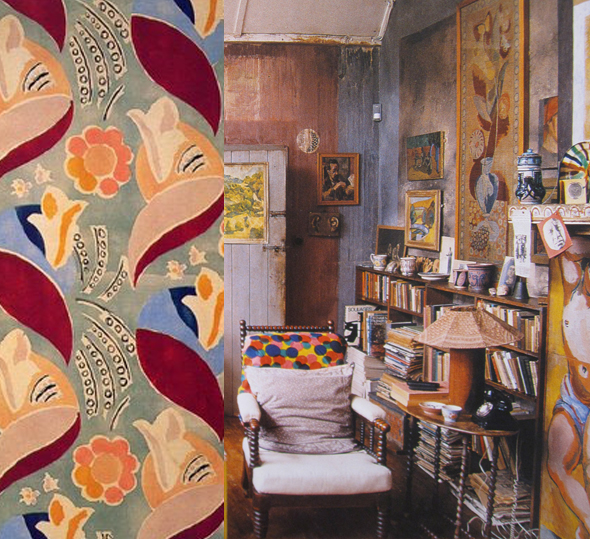
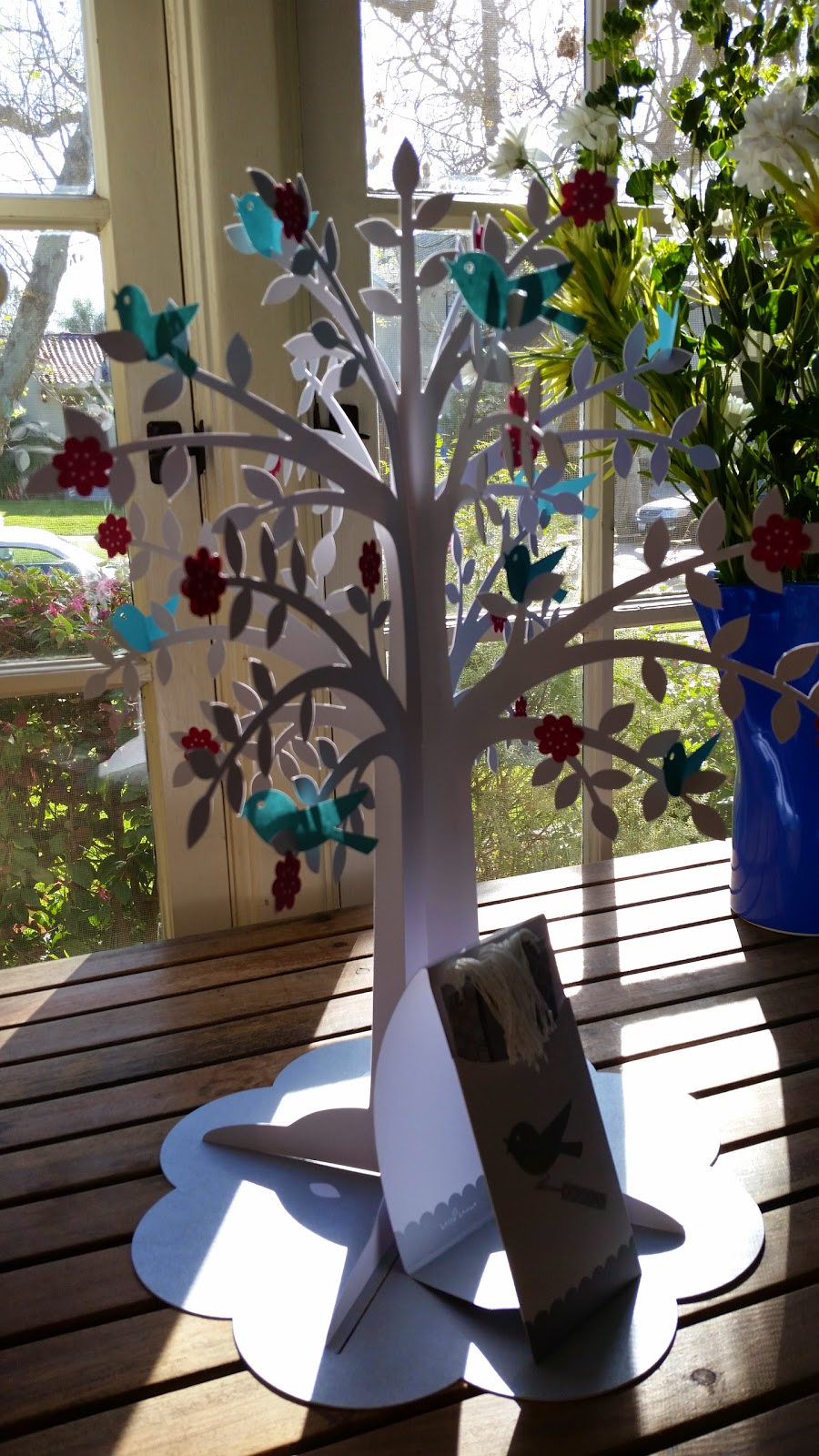
I forgot to tell ya'll about the wishing tree. I bought that craft kit years ago and stashed it somewhere that I forgot about every year. I'm not a crafty person but have the impulse to be one. I remembered it this year, though, and set it up. Basically, it's a tree with a bunch of branches that you decorate with paper bluebirds of happiness and pink flowers. There's a little box that sits beside it filled with strips of pretty paper. Guests take a slip of paper, write a wish for the birthday girl on it, fold the paper and hang it from the tree. Sophie got the nicest wishes -- no more seizures, sweet dreams, twenty more years, a happy life, etc. -- and that tree looks so cute that I might keep it up all through the spring. Pretty soon my house is going to resemble a tschotchke shop. I can't stop buying candles, especially if they're decorated on the outside and smell like Tabac/Myrrh, and do you know about these fabrics called Kanthas? I have them draped over dirty furniture, my ugly old upholstered headboard and a funky chair that I bought at a yard sale for $5 in Nashville, Tennessee over twenty-five years ago. If I close my eyes, though, I imagine myself in a sort of Vanessa Bell/Virginia Woolf Bloomsbury aesthetic.
Of course, they were real artists, literally painted their own furniture and wouldn't have been caught dead (with stones in their pockets) assembling a cardboard wishing tree, but a woman can aspire to a certain joie de vivre in a cluttered interior.
On another note, I read today that Senators Rand Paul, Cory Booker and Kirsten Gillibrand, a Republican and two Democrats, respectively, are introducing a bill that would end the federal ban on marijuana and institute a series of reforms which include downgrading its status from Schedule 1 to Schedule 2. This is a positive step for any number of reasons, but I felt a prick of annoyance at the language used in the article. The bill will be unveiled, it's a significant step, a first for the Senate, yadda yadda yadda. The operative word is introduced, and the good Lord only knows how long that introduction will go on, given some of the minds of our elected officials and, let's face it, the dodo birds they represent. Dodo birds will take oxycontin for their back pain or give their kids antidepressants and anti-psychotics and all manner of ADHD drugs, but what's going to happen to the moral fabric of this country if people start smoking pot all the time? Don't get me wrong. I'm glad the Powers That Be are getting off their asses and bringing this to the floor tomorrow morning, but I feel irked, too. I responded on Facebook with this comment:
I guess things are moving forward, albeit slowly. Maybe baby steps are good, but there's something always a bit discomfiting when the "powers that be" come together to "approve" of something that "the people" have been wailing about for decades. It bugs me, to tell you the truth. Just do it.Maybe I'm just an old, jaded. burnt-out reactionary secret anarchist-cum-socialist curmudgeon who smells the stink of patronisation and paternalism. It reminds me, a bit, of the times the Pope comes out with an encyclical advocating some kind of moral order or decides that the faithful need to go easy on the gays. It's rare for someone in power to attribute some action on their part to the people who have actually made things happen, much less to say mea culpa or, in the case of this marijuana prohibition, the collusion of big business and conservative social policy has decimated the lives of tens of thousands of people who might have benefited from medical marijuana during the last seventy-five years, so let's get this thing done and do it now. And while we're at it, let's denounce William Randolph Hearst, Mr. DuPont and Andrew Mellon who conspired to remove access to this beneficial plant so that they could continue to reap enormous and obscene profits from timber, chemicals and oil and make what once was a medicine to ease pain, cure disease, stop seizures and fight inflammation and bacteria an evil substance provoking rape, immoral acts and thoughts and even murder (that's the history of marijuana, but we're supposed to revere these titans of business and capitalism and philanthropy).
Anyhoo.
I'm probably better off squirreling around my ever-growing agglomeration of wishing trees, books, Kantha fabrics and tobacco candles and doling out the cannabis oil than kneeling in some sort of obsequious gratitude to a bunch of senators in a Georgian building across the country.
Sunday, April 20, 2014
The Bookworm Thrills
The Bookworm, circa 1974 or 1975***
***Really, one can't exclaim enough over this perfect shot that my mother took one Christmas when I was ten or eleven years old. She always claimed that she'd practically shout at me such was my reverie when immersed in a book. I think she made that maxi dress for me, and I'm struck by my hair grown out and curled, evidently, with a curling iron. There would be several painful years of adolescence still to get through when the hairstyles got even more scary, and let's just say that being a bookworm was not a ticket to popularity and ease at a fancy private middle school in Atlanta, Georgia in the seventies. Oh, and let's not even talk about the couch fabric.
Saturday, January 25, 2014
Her voice on her birthday
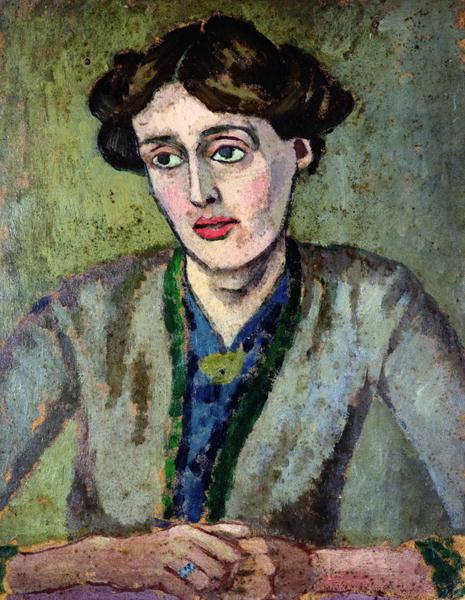
| portrait of Virginia Woolf by Roger Frye (1917) |
This gives me the shivers:
There's this, too: Literary Jukebox
Monday, January 6, 2014
Reading Benders
My sister sent this poster to me, and I love it.
I've been on a reading bender lately, in spite of the Plumbing Troubles, or maybe because of the plumbing troubles. No Virginia Woolf (one of my favorite writers whom I haven't visited in a long, long time), but I devoured Anthony Marra's A Constellation of Vital Phenomena, a novel about post-Soviet Chechnya that reminded me of a more intense The English Patient. I had been reading The Goldfinch, too, the first hardback book that I've bought in months, but I put it down when I became so immersed in the Marra novel. I was going to start back in when I read about Wave by Sonali Deraniyigala and decided to download it. It's beautiful writing -- the true story of a woman who survived but lost both her young sons, her husband and her parents in the 2004 tsunami -- and don't ask me why this hideous subject makes for an incredible story -- and I can't put it down. I have every intention of finishing The Goldfinch and then might start on The Luminaries. As for Virginia Woolf, another read of The Waves might be in order, or my personal favorite, To the Lighthouse.
These were my five favorite books of 2013, in no particular order. I have several friends who published books this year, but I won't include them here --
I want to show you more by Jaime Quatro is a collection of rocking short stories that were weird, subtle and very sexy. Quatro got into my head and lived there for a while, and when I was finished with her book, I wished that I knew her.
Behind the beautiful forevers by Katherine Boo is non-fiction, the story of garbage collectors in Anawandi, a slum just over the fence from luxury hotels in Mumbai, India. The book is shocking in its depiction of extreme poverty, but it reads like a novel, and I felt immersed in these people's lives and in their humanity. Some people claim that the book was depressing -- I felt it was eye-opening.
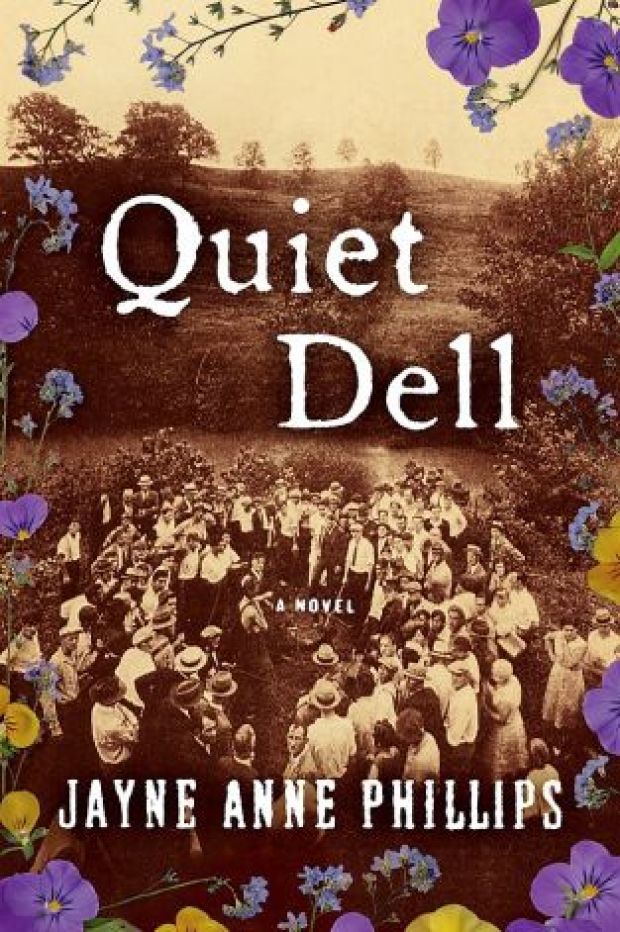
Quiet Dell by Jayne Anne Phillips was as good as any of her other novels, all of which I've read and loved. This one was based on the true sordid story of a con man who lured widows with love letters and then murdered them. The story takes place in 1931, and Phillips includes some real newspaper accounts of the tragedy as well as photography. The characters she adds to the true life story are wonderfully drawn, particularly a female reporter and the photographer who accompanies her. I also loved how Phillips wove the haunting voice of one of the murdered children into the narrative.
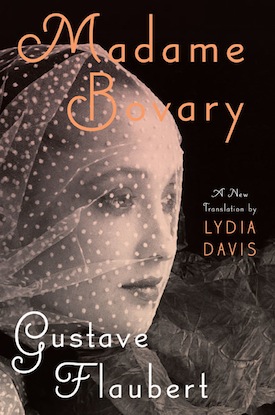
I hadn't picked up Madame Bovary by Gustave Flaubert since my undergraduate days as a French lit major, but this Lydia Davis translation made me embarrassed that I'd ever knocked the novel. If you haven't read it, you should.
All That Is by James Salter got so many good reviews by so many great writers who were near-cultish in their love of the writer that I felt compelled to read him. Salter was unfamiliar to me, and when I read this novel, I could hardly believe that I had never read or heard of him. That happened to me before, when I "discovered" Richard Yates' Revolutionary Road when David Sedaris recommended it at one of his performances in Los Angeles. Where the hell was I and why have I not read this? I thought for both the Yates and the Salter. The writing in All That Is is intense, male, beautiful and sexy.
So, those are my five favorite books of 2013, excluding my friends' wonderful memoirs. Looking back, each of them is intense and dark in some way, two are sexy as hell and none are particularly uplifting unless you're like me and feel euphoric when you read beautiful prose. I guess there's no denying the wild horse in me.
Tuesday, May 14, 2013
I am wondering whether you
would rather see the pile of papers in my filing box, papers that I need to go through and make sense of, insurance claims, etc., that reach all the way up to suicidal Virginia Woolf's nose:
or,
see what I made myself for lunch today, smoked lemon pepper salmon with cream cheese on a toasted bagel, positioned in front of hydrangeas and roses?
or
listen to the poet Frank O'Hara read An Airplane Whistle (after Heine) which is not from his collection titled Lunch Poems.
Thursday, July 7, 2011
On my "sharp, absurd little personality"
The dream is too often about myself. To correct this; and to forget one’s own sharp absurd little personality, reputation and the rest of it, one should read; see outsiders; think more; write more logically; above all be full of work; and practise anonymity. Silence in company…
Virginia Woolf
via Crashinglybeautiful
Subscribe to:
Posts (Atom)