Showing posts with label Jean Vanier. Show all posts

Tuesday, December 22, 2015

Finding the Places of Hope


The more we lose, the more we come close to the reality of what it is to be human. Which is to accept our weaknesses, to discover that they’re beautiful. So many people are running around doing lots of things, but they’re controlled by anguish.
Jean Vanier 

Henry, Oliver and I went to LACMA last night and visited The Rain Room. It's a very cool installation -- a sqaure room with constant rain fall, except around yourself. You can walk very slowly through rain yet not under rain, if that makes sense.

I always struggle a bit with the pretension inherent in museums. Then I walked through the room along with my sons and other Angelenos. I was charmed.

If you rush or run, you get wet. If you stand still or walk ever so slowly, you're cocooned and able to hear the rain and see it, but it doesn't touch you. There's all kind of metaphor in that, no?


Have I ever told you how much I love Los Angeles?


We also wandered into the Diana Thater exhibit which was some kind of multi-media show about the imagination.


Cool stuff. We were there less than an hour and home 45 minutes later. Gratitude.


I know I've written quite a bit about Jean Vanier and L'Arche here on the old blog. He's my hero. Ian Brown, the terrific Canadian journalist whose book A Boy in the Moon I wrote about years ago when it came out, wrote this terrific profile about Vanier. Read it if you feel hopeless. Read it if your life is filled with riches, both material and spiritual or delirious and spine-tingling sex.

Jean Vanier's comfort and joy: 'What we have to do is find the places of hope'

Monday, November 2, 2015

To Be Human Is NOT To Be Powerful


Yesterday's post Things People Say  provoked a bit of discussion in the comments and particularly over on Facebook that I thought we should hash out a bit more. Since I've been feeling as sere and uninspired of late as the California landscape, I thank you for helping to kick me in the fanny and feel a bit of pep in my step.

I am writing a book right now and have been for the last decade or more about the last eighteen years of my life. The book is, of course, about Sophie, about disability, about identity, about what it means to be human, about how we do it, how I do it and about how all these things sort of intersect. I can't attest to the quality of the book-in-progress, but one of the things I do as a writer, one of the things that I find necessary to my survival (a bit of hyperbole, but maybe not) is to write down my observations, even as they happen and to wrest some sort of meaning from my experiences through words. Words equal blood, to tell you the truth. Drip. I strive to be non-judgmental in the telling, sometimes, using words to convey emotion. Sometimes I succeeed, I think, and other times I don't. I'm not sure what happened with the post yesterday, but I do know that it struck a chord and that some people were offended for the woman I called out and others were offended by the woman I called out.

Here's the thing. Things People Say is a "thing" I use throughout my book to convey everyday experiences raising a child with severe disabilities. I try not to write about my own responses to these things but rather to tell them like they are and leave the interpretation up to the reader. That being said, I don't always do a good job, and yesterday's post was probably a good example of my being half-assed and not just coming right out and explaining things.

Beyond my hatred of the use of the word "retarded," I was struck yesterday by the irony of a physically disabled woman putting down a cognitively disabled woman. Sophie, as you remember was standing right with me. Let me say that this is not unusual. The disabled as a population are not some sort of tribe, always recognizing their kin or even backing one another up. Did you know that there are great rifts, even, between those who are disabled themselves and those who parent the disabled? I'd venture to say -- with a pretty certain authority -- that the cognitively disabled are at the bottom of the caste system, if we can stand to be non-politically correct, and while I don't want to assign rankings to discriminated peoples (all the isms), I feel pretty strongly that with few exceptions, to be "retarded" or cognitively disabled is a fate worse than death for many in our culture. And contrary to the increased visibility that others on the fringe of society are earning (not without enormous and grotesque struggle), the cognitively disabled are lagging behind. I'd venture to say that they have no voice -- quite literally -- other than mine. Ours.

I wince when I hear those in wheelchairs object to people condescending to them, not because they are in a wheelchair but because they are taken to be "retarded." The retarded are, in effect, even less than the physically disabled, relegated to an inferior position.

We live in a culture that looks on disability -- both physical and cognitive -- as something "less than." Those of us who walk are "grateful" to not be in a wheelchair.  The formerly abled who through accident become disabled often go through great trauma, feel suicidal, would rather die than lose their "abilities." Pregnant women use invasive medical procedures to determine whether their unborn children are "healthy," and when they discover any abnormality, may decide to abort on the basis of "the difficult life ahead for the child."

This is the way it is. I am passing no judgement, am a firm believer in a woman's right to choose abortion, no matter the reason.

I wonder, though, if disability is more a social construct than otherwise.

We live in a culture that defines people -- their worth and sometimes their very existence -- by their intelligence.

I'm not talking about being inspired by those with disabilities or by those of us who care for individuals with disabilities.

I could never do what you do. I don't know how you do it. 

I'm talking about truly living in concert, without pity or judgement, with those who are different than us -- beyond color, gender or sexuality and "ability."

There is a lack of synchronicity between our society and people with disabilities. A society that honours only the powerful, the clever, and the winners necessarily belittles the weak. It is as if to say: to be human is to be powerful.
 Those who see the heart only as a place of weakness will be fearful of their own hearts. For them, the heart is a place of pain and anguish, of chaos and of transitory emotions. So they reject those who live essentially by their hearts, who cannot develop the same intellectual and rational capacities as others.
Jean Vanier, Becoming Human 

Friday, March 13, 2015

Jean Vanier and The Templeton Prize


The Templeton Prize "each year honors a living person who has made an exceptional contribution to affirming life’s breadth of spiritual dimensions, whether through insight, discovery, or practical works." The monetary value is always set above that of the Nobel Prize because Templeton believes that "benefits from discoveries that illuminate spiritual questions can be quantifiably more vast than those from other worthy human endeavors." 

One of my heroes, Jean Vanier, the creator of L'Arche, has won the Templeton Prize for his "advocacy of belonging." If you don't know about this man, you need to. I'll give you some links and encourage you to check them out:

Templeton Prize Winner

Vanier's Acceptance Speech


To become fully human is to let down the barriers, to open up and discover that every person is beautiful. Under all the jobs you’re doing, responsibilities, there is you,” Vanier answers, adding, “And you, at the heart of who you are, you’re somebody also crying out, ‘does somebody love me?’ Not just for what I can do, but for who I am."


Thursday, May 23, 2013

L'Arche, BLOOM and Jean Vanier


I 've written here a few times about L'Arche, the worldwide communities that bring together adults with intellectual disabilities and young adult volunteers who call themselves assistants. The model was conceived by humanist, theologian and philosopher Jean Vanier, and one of my favorite advocates and bloggers, Canadian Louise Kinross at BLOOM, interviewed him earlier this week.

Here's a snippet, but I urge you to click on over and read the whole thing.

BLOOM: Do you think our culture will ever change to the point that people with disabilities are accepted?

Jean Vanier: I think there will always be a tension. I think something has to be done in schools. I think if one can teach right at the beginning of school, not just the need for success and to go up the ladder, but the need for being together. I was at a school in Calcutta where they were in a circle and the ones who were better were helping the ones who were doing less well. It’s to help children to discover the power of love. That togetherness is something incredibly beautiful. 

The fear is that our schools are being run on the power system and children are not learning to be together in a place of happiness and love. This is the problem of deep individualism.

But of course parents are struggling with this. Parents of assistants at L’Arche are struggling with this. I was speaking at a school of one of our assistants and one of the parents said ‘What are your problems at L’Arche?’ 

I said one of the problems is that you’re very happy if your child comes to stay at L’Arche as an assistant for six months. But if your child wants to stay longer, you’re upset. Because you say ‘staying with people like that is degrading.’ 

There’s a whole change needed and let’s begin at the school level, to help children so that they no longer despise a child in the classroom who’s weaker, but they can see that it’s a benefit to everybody and it brings forth the beautiful qualities in children.

Saturday, June 30, 2012

Moved to grateful tears, again, by Ian Brown and changing the world

I wrote about Ian Brown's amazing book The Boy in the Moon nearly a year ago. Today, I came upon a  snippet of video on Louise's blog from a presentation he gave at Holland Bloorview.

Please watch this:


Did you listen to Mr. Brown's dream? The one about L'Arche and living and working, creating, doing what you do, in these homes between where these people live? For one month? Did you hear him describe his dream of you eating your meals, three times a day and then bathing one person once a week? Did you hear him imagine how that would change the world?

I believe it to be so.

Monday, March 26, 2012

While I'm away,

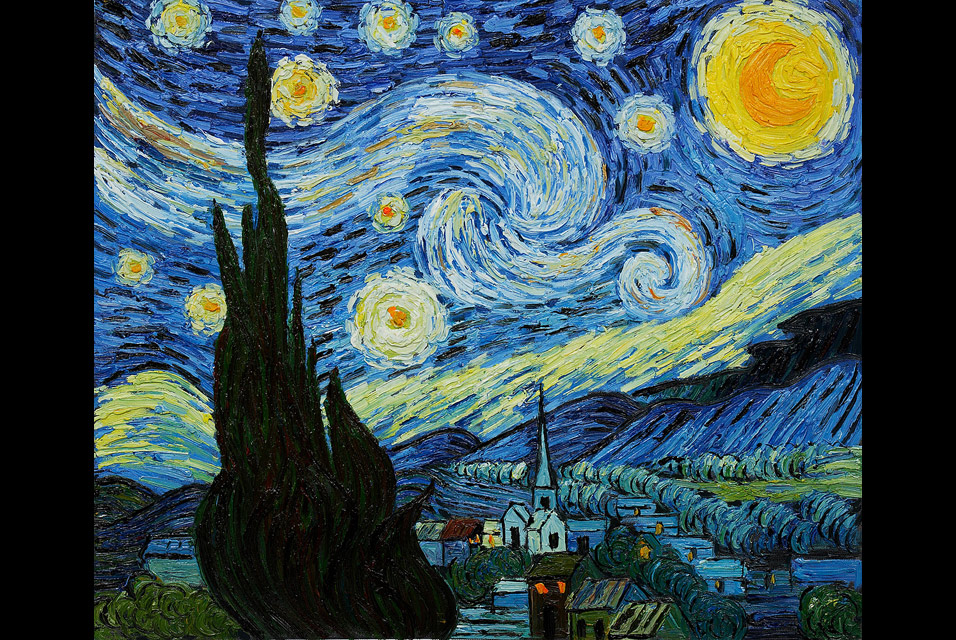
Vincent Van Gogh, Starry Night, 


please listen to this -- all of it.


or Click HERE.

There's something for everyone -- the creative, the intelligent, the abled and the disabled. It's really something.

Listen to it.

Saturday, August 13, 2011

Reinforcements

Jean Vanier at L'Arche London
When we begin to believe that there is greater joy in working with and for others, rather than just for ourselves, then our society will truly become a place of celebration.
Jean Vanier
Your comments yesterday were so thoughtful and provocative. Thank you for them. In keeping with the spirit of my post and those comments, I was happy to open up my Word For the Day and read the wise words of Jean Vanier, the Canadian Catholic theologian, philosopher and humanitarian who founded L'Arche, an international organization that creates communities where people with developmental disabilities and those who assist them share life together.

LinkWithin

Related Posts Plugin for WordPress, Blogger...