Showing posts with label Buddhism. Show all posts

Monday, March 30, 2020

We Can Do Hard Things, Monday 3/30/20


to Chris Rice


Some of you have asked -- my boy Henry is up in Washington. He lives off campus with a few friends and is doing "school" virtually. I understand from both boys that school is really just "school," that they don't feel they're actually learning and that it's all bullshit and boring. I hear the word boring a lot, and to tell you the truth, I feel grateful that they're bored. At least for now, because who knows what sort of long-term effects this strange, strange time will have on them, our youth, our hope, our future?

I miss Henry.

Sophie just had a huge seizure that rattled me. I'm still capable of being rattled despite being tens of thousands of seizures in. Epilepsy really sucks. When will this be over? Never.

I read an article by Aisha S. Ahmad titled "Why You Should Ignore All That Coronavirus Productivity" that was published in the Chronicle of Higher Education. The writer says:
Yet as someone who has experience with crises around the world, what I see behind this scramble for productivity is a perilous assumption. The answer to the question everyone is asking — "When will this be over?" — is simple and obvious, yet terribly hard to accept. The answer is never.

It's not depressing, though. It's very wise, and what it did for me was to affirm what I already know, have already experienced yet willfully forget or bury or don't have the time to remember. What I already know is that I can do hard things. I know this hard thing is like no other hard thing in its scale, so I won't use the word but. It's not about me. What I can offer, though, is my tiny little mother mind™ -- remember that? I do. It's the part of me that was left after Sophie was diagnosed on June 14th, 1995. The rest of me came before that. People are used to things being recoverable, and we live in a culture -- whether religious or not -- that makes faith and hope virtues in what to me is a weird way. Some things are just not recoverable. They are irrevocable. I drove to Ralph's grocery store yesterday, wearing a mask and gloves. I have tried to limit myself from any of the shopping, but I really needed to see what was there because I'm the one planning and making the meals. I parked my car and stood in a long line that snaked behind the building, each person standing six feet from the next. We were let in one at a time, in small groups, and we shopped that way, too. Everyone is shopping that way. My eyes filled up with tears and my mask and warm breath made them fog up so I couldn't see. A long time ago, I was driving my three young children around the shitty from one of Sophie's various therapies or something. I'd gone through the drive-through of In N Out to get some french fries for them. Oliver was an infant, facing backwards, but Henry was three years old and sat in a car seat next to Sophie who was also in a car seat. Henry fed Sophie french fries, one at a time, cheerfully. Cheerfully. Or matter of factly. Matter of factly. I glanced up in the rearview mirror and teared up. The words It will never be normal for them rose up in a snaky cartoon-like bubble, filling the entire back seat. Irrevocable. I think that's why we cry. We are sad for things irrevocable.


I was talking about this with my friend Chris, who is no stranger to things irrevocable, to apocalyptic experiences, who is wise and like a big sister to me. We also know that we can feel joy anyway, live anyway, I said. She agreed. And that my friend is the ultimate example of holding two seemingly disparate ideas in one's mind at the same time and still being able to function. 

I can do hard things. You can do hard things. We can do hard things.


...be slow. Let this distract you. Let it change how you thinnk and how you see the world. Because the world is our work. And so, may this tragedy tear down all our faulty assumptions and give us the courage of bold new ideas. 
Aisha Ahmad

Tuesday, September 18, 2018

You can only lose what you cling to

La Jolla, CA 1996


The thought crossed my mind the other day that Sophie's epilepsy is a beast, a monster, and she is not her epilepsy, not a beast or a monster and I'm always fighting it and not her. I cannot can't can not accept it push against and never through it over and over and over year after year after year. This is contrary to Buddhist thought. The harder you push against the more you resist the strength of your hate is the measure of the intractability against which you push resist and hate. I just can't do it.


What do the religious say? Something from Ephesians, I think. Something about now unto him that is able to do exceeding abundantly above all that we ask or think, according to the power that worketh in us.  Of course, there's that power which is a Him, capital H, I wager, or God.


We are all asked to do more than we can do.

We are all given way more than we can handle, saith I.

Friday, May 12, 2017

Three Comments, Plus


Sometimes I can't get out from under sorrow. An oppressive blanket that I just can't kick off. Otherwise, it lies under me, a mattress on which my strong straight back rests.

Silly metaphors.


I.

Anger first, then sorrow, my friend Mary texted me this morning.


II.

No rocket science, especially about the med community overall. Pharm feeds off and feeds it, now it wants the lion's share of a thing that sadly everyone else worked so hard to prove was the right thing all along. They will of course fuck it up, wrote my friend Ken in response to my most recent posts.


III.

The unwillingness to have a conversation is shocking to me. This is how our previous two docs functioned. They didn't want to hear anything from us and didn't entertain the thought that how the body functions or doesn't on the most basic biochemical levels might contribute to seizures. Or even tell us that they didn't believe that was an issue.

So my question to myself is why continue seeing neurologists at all? It seems to be the wrong tool for the job at this point, like going to an auto mechanic to treat cancer. But we're told that we have to because it's irresponsible not to have one. But is it? We've learned on our own how to wean as safely as possible. We've learned from experience that extra [drug] and not rescue benzos best stop her clusters. But I still worry, always worry, that as EVERYONE says, we can't go it alone because they're DOCTORS and they know things and we're not. But I'm not sure doctor means what people thinks it means at all. It sure as hell doesn't mean critical thinking or curious mind, wrote my friend Chris from across the country in an email I got this morning.


The gentle advice of my friend Moye, my sweet sister Jennifer's concern, the Bird Photographer's embrace, the raucous laughter of my friend Debra, and the arrival of Saint Mirtha conspire against the immediacy of sorrow. They, and the three comments that fell into my lap this morning, peeled the blanket back.

Thank them.

I am always trying to string moments together to make a strand that will last, something to hang around my neck, but I'm thinking that I must acknowledge moments as only moments. There's no end to the stringing, otherwise. So many sounds. Sorrow. Samsara. Surrender.

Monday, January 23, 2017

We're Citizens, Not Spectators


The most terrible possibility of the post-inaugural world—the one most feared by many people I know—is a serious increase in hatred, violence, misogyny, homophobia, racism, and xenophobia, the usual forces that lie sleeping in any mass society, and when stirred up, can give rise to forms of fascism. I realize that fascism does happen. But I refuse to assume, absent hard evidence, that that’s where we are headed. My guess is—and my hope and faith is—that the quotient of blind hatred in America will remain more or less the same, and that in the end basic human decency will rule the day. 
Norman Fischer 


I'm finding much to ponder on this gray, rainy morning. I really like these articles on the Buddhist site Tricycle.

Last night I finished reading Bluets a remarkable book by Maggie Nelson. I'm back into The Girls by Emily Klein and Tears We Cannot Stop by Eric Dyson. The novel is an easy but well-written read, and the non-fiction is sobering but necessary, I think, for those of us who are privileged and white.  I'm trying to stay off Facebook a bit -- not shutting it out entirely because I actually enjoy staying engaged there, but it also kind of exhausts me and I have some free-lance work to do and a manuscript to prepare for an editor (!).

I hope ya'll are surviving. The hard work remains, doesn't it? Exhausting but necessary.

If you haven't signed up yet and wish to continue the work, Daily Action is an easy way to do so. You can sign up for daily action texts here. Today's action is to urge your senator to oppose modern-day robber baron Steven Mnuchin as Treasury Secretary. Daily Action makes the whole process of doing something every day very simple and streamlined. If you live in a conservative or swing state, it's so important to keep those phones going. If there's one thing that this election cycle and new administration has propelled, it's activism for progressive causes -- the real thing and not just lip service. I like this quote from one of the Buddhist articles that I linked to above:

For many decades American politics has been becoming increasingly spectacular in the literal sense of that word: like a spectacle, a show. Maybe Trump’s expertise as a reality TV star, and the consequences of his style, will finally inspire us to stop being spectators and begin being citizens. This is my hope. As citizens we will have to pay less attention to political hype and more attention to actual political details. We will have to be better informed and more critical. We will have to determine when it is effective and crucial to respond to events by writing, posting, agitating, and organizing. We will have to call local and state representatives, registering protests as necessary in the spirit of dharma: consistently, patiently, peacefully, and with respect for all. There will be many opportunities for creativity in our political expression. Staying close to our practice will help us to seize these possibilities.


Saturday, November 5, 2016

It's NaFaCaMo, Folks! Day Five


It's getting closer, and I know I'm preaching to a pretty big choir here with the occasional errant outlier, but this election is whupping our asses. I bought a choker the other day, a black ribbon with a beautiful blue Buddha on it. I don't ordinarily like anything that high on my neck. I hate turtlenecks and claim my decollete as one of my last remaining assets, so I tend to wear necklaces that hang right there, drawing the eyes down from the chin and the crepe -- whatever. I bought a choker the other day because I loved it, and because I felt the visceral need to be literally choked. I don't mean that to sound kinky or perverse -- I just feel choked up and tired, exhausted really, from the whole shebang. I'm tired of reading about it, hearing about it, listening to it and, most of all, talking about it. I needed a symbolic choker, so I bought it and put it on right in the store, vowing to not talk about the election or listen to anything more about the election and to keep it on until Tuesday.

#Imwithher

What does this have to do with NaFaCaMo, you might ask? Well, everything, actually. We've got to vote Hillary Clinton in to office as President because we have the best chance of having our needs as caregivers met. I believe we have the best chance of having our children with disabilities' needs met. Hell, I'm a lefty liberal, so I believe we have the best chance of having our needs as human beings met.

And that's all I'm saying about that.


Wednesday, June 22, 2016

Thoughts Are Clouds


Pema Chodron said You are the sky. Everything else is just the weather.

I'm thinking about that today as I navigate dramas of various sorts.


Thursday, February 11, 2016

Reflections


I can't get enough of my new dining room set-up. A lot is changed around here. Oliver gave me that sitting Buddha with the pot that holds incense. I don't like incense, though, so it's empty which I think is more fitting. To be empty. Emptied. I remember being a little girl at church on Sunday and nearly fainting and certainly gagging when the priest walked down the aisle swinging that thing around with incense wafting out and around. I felt as if I were suffocating. Perhaps that's symbolic of my wrestling and then fleeing the Catholic Church. Perhaps it's just that I hate incense. When Oliver gave me the little Buddha incense holder, he included a box of cheap incense, and he lit it and immediately the house smelled like one of those stores that sells things for the spiritually materialistic. I'm actually prone to spiritual materialism -- I love mala beads around my neck and wrists, my red Buddha necklace, my turquoise Buddha ring, the Mother Mary cards, my Book of Changes, the Poet Tarot Cards. But no incense.


I took a shower tonight, and while the water beat down on me, I thought about jinxes. I thought about Sophie doing so well for the last couple of days, and maybe it'll only be the last couple of days, but it's been a good couple of days. Have we found the sweet spot with the strain (ACDC) and dosage ( a little higher)? Or is it something else? Is it the hot, dry weather and absence of pressure? Is it just -- well -- just? It occurred to me as I leaned my forehead against the tile and closed my eyes that despite the passage of nearly 21 years, I still know so very little about what makes my daughter's brain tick -- and tick too much. Despite those 21 years, and countless showers where I had very similar thoughts, where I crouched down and cried while the baby screamed in the bedroom, where I leant into the tile, exhausted, the tile perhaps like Roman stone, trod on, trod on, trod on, I still know so little. My sighs and tears and musings are always the same, an endless cycle, samsara. Suffocating. To be emptied. An empty vessel with room for gratitude.

Saturday, July 4, 2015

Hedgebrook, Day 10


Windowseat in Willow Cottage, Hedgebrook

I startled at the sudden buzz of a fly, so deep I was in the writing. I've been killing flies all week, merciless and decidedly un-Buddhist. Where in the hell did that one come in? I thought. Had it slipped through a hole somewhere or been asleep and woken? Do flies sleep? It sounded frantic and beat against the glass of the window-seat. I opened the window a crack, and it made its way out.

Have you ever seen a bird climb a tree? I watched a small one make its way from the ground, up the pine outside the window, skittering up the bark, navigating the whorls and sappy spots and hopping in increments at a diagonal. When he reached a particularly large knot, though, he stopped and flew up to a branch where he perched in ease.

Happy Fourth of July. At risk of offending someone, I must admit that it's nice not to be waving a flag but to be deep in the greeny woods in the company of birds and bugs who know no country.

Wednesday, May 27, 2015

Ecological Politics and Riprap


It's obviously human hubris to think we can destroy the planet, can destroy life. It's just another exaggeration of ourselves.

 A kind of bottom line is that all human activity is as trivial as anything else. We can humbly acknowledge that and excuse ourselves from exaggerating our importance, even as a threat, and also recognize the scale and the beauty of things. And then go to work. Don't imagine that we're doing ecological politics to save the world. We're doing ecological politics to save ourselves, to save our souls. It's a personal exercise in character and in manners. It's a matter of etiquette. It's a matter of living right. It's not that the planet requires us to be good to it. It's that we must do it because it's an aesthetic and ethical choice.

 Those issues are all real, but they're not total. And the power of the universe far surpasses any damage we can do to it.

Gary Snyder, Tricycle Magazine interview, adapted from Nobody Home: Writing, Buddhism and Living in Places, by Julia Martin and Gary Snyder 


If you're like me, you feel a rising panic about the state of the ecological world. You feel inadequate to the task and perhaps even complicit. You feel like your thoughts are free-floating and ineffectual. Your attempts to reduce your carbon footprint, to tread lightly, to support environmental causes seem paltry in the face of population explosions, oil-slicked animals along the coast, a contaminated food supply, and an over-medicated population whose urine and feces are laced with chemicals that are then flushed into the water and recycled, squirted from our breasts into babies' mouths and onward. That was a hellish sentence, no?

I read Gary Snyder's provocative words, excerpted above, and felt, if not comforted, then galvanized. I'd love to hear what you think of them -- even if you have no Buddhist leanings.

Here's a Gary Snyder poem -- one of my favorites:


Riprap

Lay down these words
Before your mind like rocks.
               placed solid, by hands
In choice of place, set
Before the body of the mind
               in space and time:
Solidityof bark, leaf, or wall
               riprap of things.
Cobble of milky way.
               straying planets.
These poems, people,
               lost  ponies with
Dragging saddles -
               and rocky sure-foot trails.
The worlds like and endless
                four-dimensional
Game of Go.
                ants and pebbles
In the thin loam, each rock a word
                 a creek-washed stone
Granite: ingrained
                 with torment of fire and weight
Crystal and sediment linked hot
                 all change, in thoughts,
As well as things.

Gary Snyder

Saturday, August 23, 2014

Seahorse Days of August

August 2010


I can sit in the cheap garden chair, coffee in a yellow cup on the arm and the small fountain that Oliver built gurgling beside me, reading. I hear the yips of the neighbor's dog, lift my head to wonder from where the constant hum of a chain-saw comes, notice my irritation and notice it drift away.

If we wish to live well in the world, not just amble along through life without any examination of our being, then we must engage in the effort to find meaning in our lives. In order to do this, we have to find a way to balance our own interiority with an empathic recognition of others. Without this balance, we can become invested in our needs and performance while forgetting that there are others in the animal, vegetable, and mineral world. Or we can become so outwardly directed, perhaps even to the point of interfering, as to fail to see our own shortcomings. We must ask: for whom do we practice? We see the paradox of self in the world, focusing inwardly in order to manifest outwardly. The inward look is the outward view. Ultimately we practice for others as our inward polishing manifests itself as good action in our activities.

-from Following the Way of Ryokan in the Fall 2014 issue of Tricycle Magazine


There is goodness and gratitude everywhere. Yesterday, as I made my way through the day, caring for my children and worrying about Sophie, I thought much, probably too much, about the criticism thrown at me. I tried to give it space, to open myself up not to the words, the venom in the words,  but to my own reaction to the words. That takes away the sting in the same way that breathing through physical pain lessens its impact, if not the pain itself. Does that make sense? Last night, this post, one that I wrote in response to overwhelming generosity afforded me in the midst of that person's horrific pain, appeared on my Facebook feed. I will take this as a sign of grace and am stunned, again, by the wonder of the world and this community.


Saturday, July 5, 2014

Writing, Publishing, Whoring, Middle School and Dr. Suess

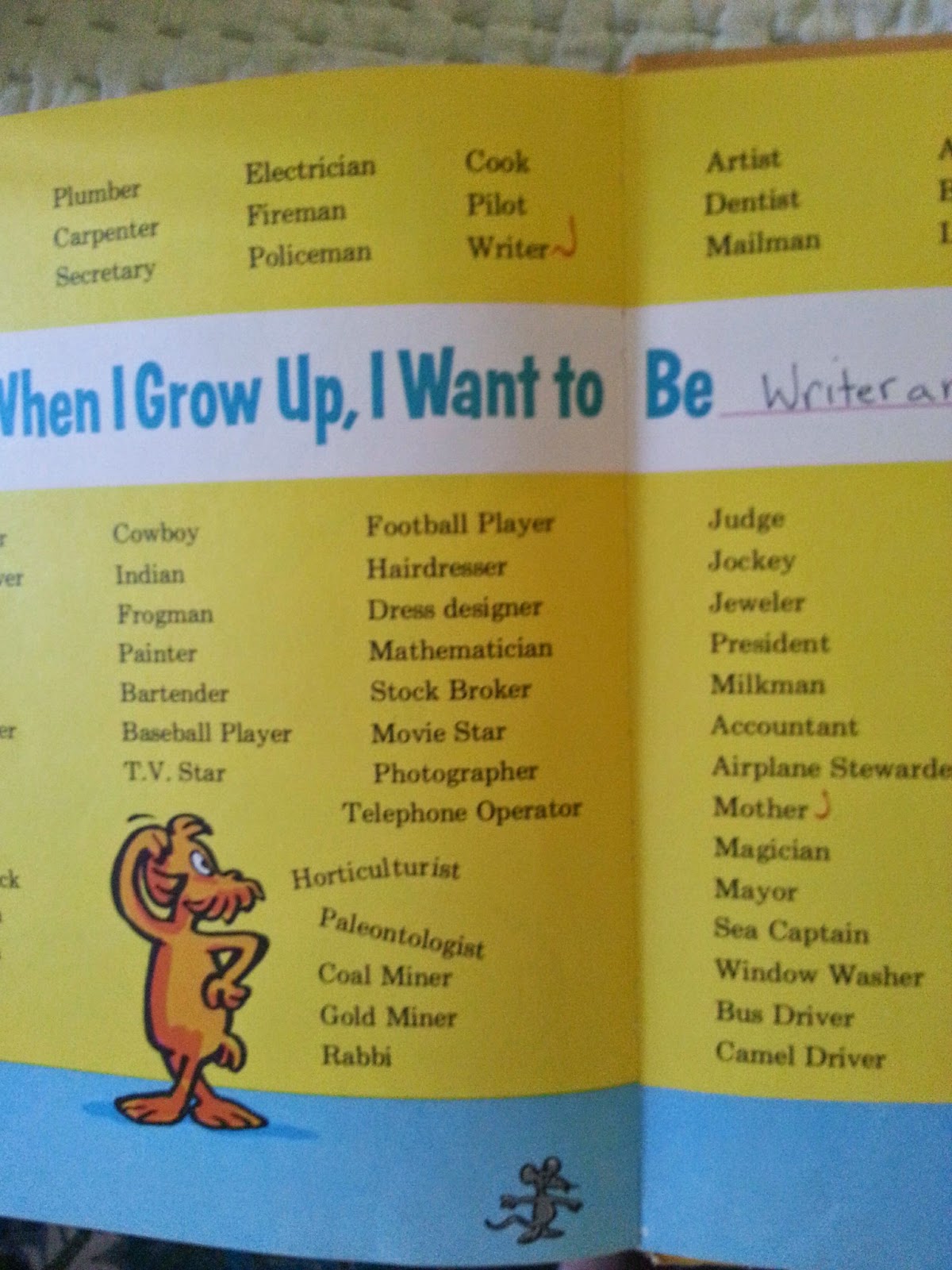
from my 1973 edition of Dr. Suess' My Book About Me


This being published thing is an odd bag. Is that the right expression? My mini-memoir, Hope for a Sea Change has been "out" for a few weeks, now, and thanks to all of ya'll, it's sold pretty briskly on both Shebooks and Amazon. I have hopes to get a "real" book -- the whole shebang from which the ebook was only an excerpt -- published one day as well. That's the pipe dream, the life dream. My pondering today is the marketing aspect of publishing, the whoring, really, one must do to "sell" your book. I have a lot of writer friends and several writing mentors. I naturally appealed to them, first, when I knew my ebook was coming out because I trusted that they would reach out to their own networks and help me to spread the word. Many of them have gone through this process, and I worked pretty tirelessly to promote their own writing when they themselves had essays and books published. I did this not only because it seems to me to be a sort of writer etiquette but also because I genuinely believed in their writing and wanted to promote it. While I didn't do this because, I assumed that this would be reciprocated,  -- or should I say presumed? What's happened is that a few of these writing friends and mentors have, for whatever reason, done nothing to help me promote the book. I find this weird and a little upsetting, but not really upsetting -- I mean, really, in the scheme of things given my life? Maybe they don't have the time. Maybe they hated the ebook and can't bring themselves to promote it. Maybe they're against Amazon and ebooks in general. The professional world of writing is intimidating to me -- the whole MFA thing, the workshops, the expensive colonies and prizes, the Facebook pages, the pandering and the cliques. Oh, the cliques. I see people I know, who I think of as real friends, not just social media friends, glamming and glomming onto the lionized, the powers that be in the literary world. I feel a little envious, I guess, a little aspirational, a little hurt. If I type it, will the defensiveness be purged? I feel much as I did in the eighth grade when I'd walk out of a bathroom stall at school and see The Susans or The Dianes tittering at a sink mirror, swiping blue eye-shadow over their eyelids, sticky flavored gloss over their lips. Their eyes might have shifted over to me and then away. I didn't have it in me to wear blue eye-shadow under the rose-tinted goggles I wore that year, and look at me, now, nearly forty years later, slipping out the door before they can see me.

The Buddhists talk about craving, about desire, about the source of suffering being aspiration and clinging. I get that and must remind myself of it,over and over. Good Lord, ya'll -- here's what I most wanted when I was ten years old:


I probably felt presumptuous when I crossed out "typewriter" and filled in "bookmarker holder" (what the hell?) Once again, I was slipping out the door before anyone saw.

That being said, I'm more amused and curious at this point than simpatico when other writers kvetch and complain about how little money they make as writers. There's a lot of this going on -- particularly in the Huffpost hipster set. Evidently, exposure is the thing, and you have to sacrifice money in order to get it. Since when did writers presume that they'd make a living doing what they do? Has this ever been the case except for the minority? I love to think of William Blake, naked in the garden with his wife on the weekend, after a week of working his printing press. I swoon over Nathaniel Hawthorne, penning Rapaccini's Daughter  in the few hours left to him before or after his miserable job at the Salem Custom House. When he was fired from there, he penned The Scarlet Letter. I imagine Wallace Stevens might have grumbled a bit as an insurance salesman in Hartford, Connecticut, but that didn't prevent him from scratching out some of his most sublime poetry on scraps of paper throughout the day.

The other set of writers that make me raise my eyebrows are those that insist it's impossible to write when you have children - or that having children and raising them somehow lowers your intellectual capacity. Some journalist recently claimed that the best female writers only have one child. The wonderful Zadie Smith wrote a wickedly good riposte to that, here. And I'll never forget hearing the wonderful Carol Shields, who wrote many terrific novels, delighting in her five children and denying that they'd ever sucked any creativity from her.

The thing is, I'm not going to be a writer, when certain circumstances unfold, or certain people accept me or when I am paid. I am one. I'm doing what I most wanted to do since I was a very young girl, and I can be nothing but grateful for that and keep doing it.

Sunday, May 11, 2014

Self-portrait


curious window display on La Brea, near my house


I feel a strange lethargy this preternaturally sunny, dry and windy day. Perhaps it's the two hours I spent lying on Sophie's bed watching Rosemary's Baby, one leg thrown over Sophie to keep her from trying to get off the bed and hurt herself. She is going through the difficult part of the wean process -- withdrawal seizing, agitated and clearly uncomfortable. Perhaps it wasn't such a good choice of movies to watch on Mother's Day, except those clothes! the misogyny! the spectacle of Mia Farrow's infantilism! what we know about Roman Polanski and Woody Allen! the Dakota! Ruth Gordon! Perhaps it's the Sunday blues. Perhaps it's the desire to be somewhere else sometime other -- you know the feeling that belies all the meditation, the Buddhist study, the admonition to be here now. That's it.

Tuesday, April 29, 2014

Dreaming of Guatemala


There's a dear man who works at the parking garage in an office building that Oliver and I frequent, and every week he calls Oliver handsome and smiles gently at me. He was gone for a few weeks, replaced by a surly young man who couldn't be bothered to ask whether I needed a receipt or not, much less a greeting, so this morning when we drove in to see our friend we were quite pleased. I asked him whether he'd been on vacation, and he said yes, that he'd been home to Guatemala for three weeks. I asked him why he came back, and he said that he'd lived and worked here for nearly forty years. He was going to work for three more and then retire there. He told us that it's beautiful in Guatemala and that while the country can be dangerous, it's also very relaxing. He said, though, that you can't earn a living there, that when you're young you need to get out and come north to earn some money. He said that here, in America, it's about work, work, work. We both sighed. When I pulled away, I felt a sort of stifled despair -- a yearning toward simplicity. Why are we living like this, here? Must we always be thankful, grateful for this supposed "high" standard of living? I know that I must be content -- or not must -- but somehow acknowledge and sit with where I am now, and the now being the place to be. Now.

I think.

Thursday, April 24, 2014


I have found that waiting patiently is the way to do it. Or is it patiently waiting? Waiting patiently or patiently waiting doesn't take away anguish. The line between despair and peace is blurry, as is that between clinging and release. Waiting lies in the between space, the scrim of acceptance.


Saturday, April 19, 2014

Today


Today I'm going to forget about the fact that for the third morning in a row, our dog has thrown up in my bedroom in the wee hours of the morning. I'm going to count on the wisdom of the Buddhists who claim that nothing is permanent, even the darkest of moods, even seizures, even circumstance and inequality and injustice and stupidity. I won't despair. That also means that lightness and ease, seizure freedom, equality, justice and intelligence are not permanent states either. I will be grateful.

Saturday, August 24, 2013

When the flakes settle


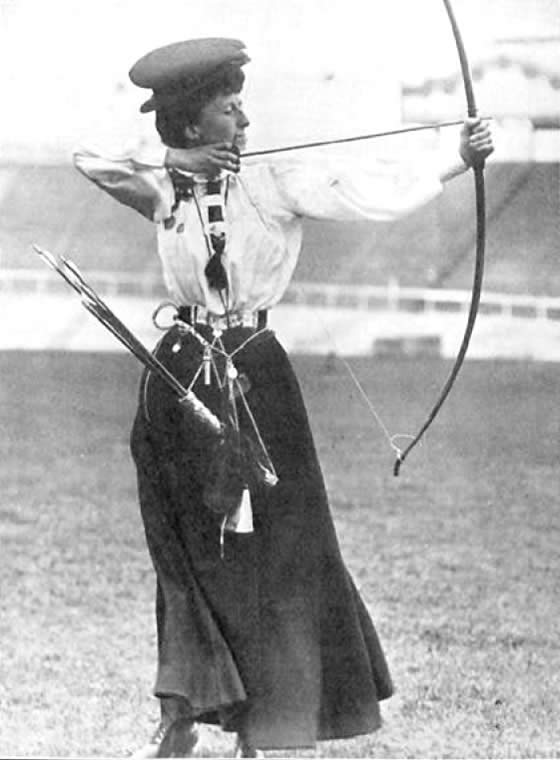
Like the archer straightening his arrow and perfecting his aim, the practitioner of meditation straightens out the mind while aiming his or her attentional energy at its object. Learning to drop what we’re doing, however momentarily, and to genuinely pay attention in the present moment, without attachment or bias, helps us become clear, just as a snow globe becomes clear when we stop shaking it and its flakes settle.
Lama Surya Das 

Tuesday, March 12, 2013

What I Want to Tell My Son When He's a Little Older


Relax

Bad things are going to happen.
Your tomatoes will grow a fungus
and your cat will get run over.
Someone will leave the bag with the ice cream
melting in the car and throw
your blue cashmere sweater in the drier.
Your husband will sleep
with a girl your daughter's age, her breasts spilling
out of her blouse. Or your wife
will remember she's a lesbian
and leave you for the woman next door. The other cat --
the one you never really liked -- will contract a disease
that requires you to pry open its feverish mouth
every four hours for a month.
Your parents will die.
No matter how many vitamins you take,
how much Pilates, you'll lose your keys,
your hair and your memory. If your daughter
doesn't plug her heart
into every live socket she passes,
you'll come home to find your son has emptied
your refrigerator, dragged it to the curb,
and called the used appliance store for a pick up -- drug money.
There's a Buddhist story of a woman chased by a tiger.
When she comes to a cliff, she sees a sturdy vine
and climbs half way down. But there's also a tiger below.
And two mice -- one white, one black -- scurry out
and begin to gnaw at the vine. At this point
she notices a wild strawberry growing from a crevice.
She looks up, down, at the mice.
Then she eats the strawberry.
So here's the view, the breeze, the pulse
in your throat. Your wallet will be stolen, you'll get fat,
slip on the bathroom tiles of a foreign hotel
and crack your hip. You'll be lonely.
Oh taste how sweet and tart
the red juice is, how the tiny seeds
crunch between your teeth.

Ellen Bass

Tuesday, January 29, 2013

How We Do It: Part XXII in a series


Filipendulous
Adjective: hanging by a thread

That's a leaf that was hanging on my windshield nearly all day, yesterday, as I drove about the city. Blown from the tree that overhangs the driveway and wet from the rain that fell off and on all weekend, the leaf clung to the window for hours, and I didn't want to clear it. Sophie was sick with the flu all last week, and as her fever spiked up and fell down, she had, paradoxically, no seizures. We discussed this last week -- the phenomenon of neurological abnormalities abating during periods of illness and fever, common among the autistic community and rarer in the epilepsy world. Around these parts, though, we were quiet, our breath was held collectively. No seizures. No seizures for a week. No one uttered a word about this -- not The Husband, not The Babysitter, not Henry, not Oliver and other than the passing observation on this blog, neither did I. Because that's how we do it around here. We hold our breath, superstitious, wary of the other shoe dropping, the proverbial jinx. 

On Sunday I went to a daylong class about the Four Noble Truths of Buddhism, taught by the great Sharon Salzburg. The first Noble Truth is the truth of dukkha, which roughly translates into anxiety, suffering, and dissatisfaction. Dukkha attests to the human tendency toward dissatisfaction with circumstances and an expectation for something different. The second Noble Truth is the origin of dukkha, or the cause of suffering, and this is craving, attachment, aversion. I thought about the first and second Noble Truths as I drove around yesterday, the yellow leaf filipendulous on my windshield. I thought about them, again, later in the afternoon, when Sophie had a huge seizure for the first time that week, right before dinner and then again, when she had another one during dinner. Oliver stood in the doorway, his face grim and asked is she all right? when it happened, again, twenty minutes later. As Sophie jerked, her face contorted into a grimace, the phlegm of the past week's flu and congestion rattling in her throat, I felt fear come flooding back, the other shoe, dropped, the jinx a prophecy. I had a minutes-long internal debate on whether or not to administer Diastat. I wondered, frantically, if she had something else, a secondary infection. She had no fever, though. I panicked, briefly, about her dying. I acknowledged that, as I have so often done and watched the thought slip away. 

A week free of seizures and then a flurry of them, and I thought, at first, that it might be some cruel joke, the brain rushing to catch up, a perverse reversion to normal. 

When the adrenaline calmed, I sat for a long time at Sophie's side and watched her breathing, her eyes open but vague, and I felt resigned to all of it, or perhaps not resigned but, rather, cool. 

The third Noble Truth is the truth of the cessation of dukkha, the removal, absence or non-arising of suffering, and the fourth outlines the path to the cessation of dukkha. Earlier in the day, as I'd driven around the city, the leaf clinging to the windshield, I had thought about the four Noble Truths, how the experience of giving birth to Sophie, to receiving her diagnosis, to looking for help for her, to fighting for her and to watching her seize, over and over and over again while simultaneously living was a near perfect parallel to the path of the four Noble Truths and that I was infused with them quite beyond my own consciousness. 

Sophie had another big seizure this morning during breakfast, and when we brought her to her room, both Henry and Oliver, dressed as SuperHorse and SuperChicken, stood in the doorway, anxious. Is she all right? they asked, and I assured them she was. They left for school, and an hour later, so did Sophie. When I went outside to my car, the leaf, of course, was gone.

Friday, December 28, 2012

God-talk and other matters


I've written over and over here about my religious or spiritual beliefs, how I've largely discarded the Catholic faith of my childhood and delved more seriously and intently into Buddhism and the more mystical sides of Christianity. If you were to ask me what I believe and whether I believe in God, I might say very inadequately that I perceive God to be Love and that this Love infuses everything and everyone in the universe, that there is no end to this Love and that life is eternal, that we are all connected to one another and to all things animate and inanimate.

World without end, amen.

I have also mentioned here that god-talk makes me squirmy and that evangelism and fundamentalism -- any kind -- makes me nearly nauseous, and that when I begin to read it, I stop. When I hear it, I can quite effectively put on a bland face, shut down my mind and go elsewhere -- the poetry of Emily Dickinson, perhaps, or the lyrics of a Bob Dylan song. I recently became uncomfortable when I read a blog of someone who lives in Newtown who called for more God in schools, so uncomfortable that I removed the blog from my blogroll and decided that I couldn't read it anymore, couldn't stomach it, really. I don't know what the deep psychological underpinnings of this discomfort might be, but the older I get the more I yearn for light, for the lightness that comes with authenticity, and the older I get the more confident I feel in recognizing this authenticity. Sometimes reading and listening to god-talk is like drowning in a murky river, slick weed tendrils wrapped around you, errant branches scraping your flesh, the light above only occasionally piercing through.

A bit of that light pierced through today when I read a blog post of an 86-year old man, a retired minister and father of another friend of mine. The title of his blog is Singing the Hymns and I am grateful for this authentic blessing and so look forward to reading more of this man's thoughts and words.

Tuesday, November 20, 2012


We should be especially grateful for having to deal with annoying people and difficult situations, because without them we would have nothing to work with. Without them, how could we practice patience, exertion, mindfulness, loving-kindness or compassion? It is by dealing with such challenges that we grow and develop.

Judy Lief, via Tricycle Magazine

LinkWithin

Related Posts Plugin for WordPress, Blogger...